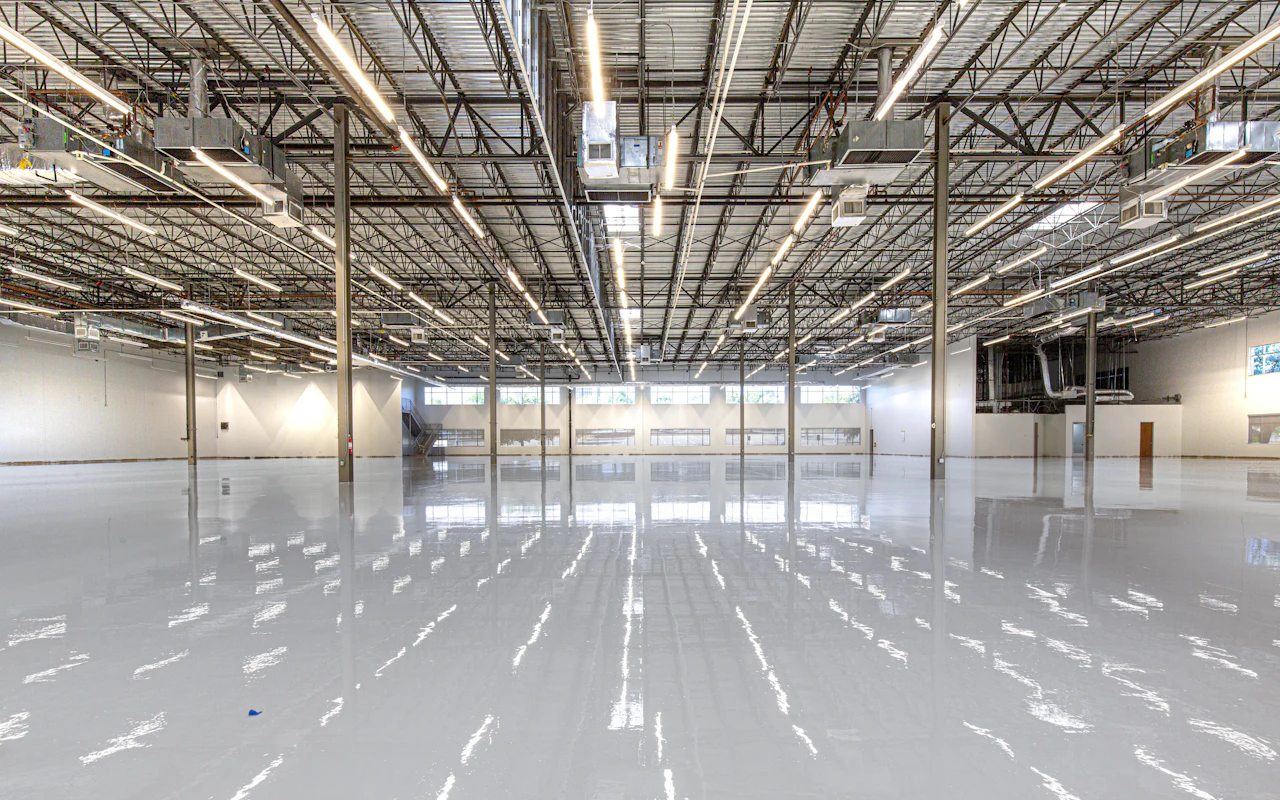
Temporary Warehouse Buildings
A temporary warehouse is usually a steel-framed building with a PVC or sheet steel roof, put up on your yard and taken down again when you no longer need the space. Suppliers hire them month by month or sell them outright.
The usual reasons are stock that has outgrown the racking, a peak season, or a main building that is being refitted.
Is it the right building for you?
These are the jobs this kind of building usually does:
- Overflow stock while you decide whether a permanent extension is worth it.
- Peak trading such as the run up to Christmas, when the extra space is needed for a set number of months.
- Decant space while a warehouse floor, roof or racking system is replaced.
- Goods-in or marshalling under cover next to a loading bay.
Not sure of the size yet? The spec planner helps.
| Choice | What suppliers will ask | Why it matters |
|---|---|---|
| Footprint | Width (the clear span) and length in metres | Span sets the frame size; length is added in bays. |
| Eaves height | The height you need under the frame | Racking, forklift masts and door heights all depend on it. |
| Roof and walls | PVC or sheet steel, uninsulated or insulated | Insulated steel suits temperature-sensitive stock. |
| Doors | Number and size of vehicle doors, plus pedestrian doors | Each large opening adds to the frame and the price. |
| Ground | Concrete or tarmac, or grass and soft ground | Soft ground usually needs a base before anything goes up. |
Start with the stock, not the building
It is tempting to ask for "a 20 by 40" because it sounds about right. You will get a far better quote if you start from what goes inside: how many pallet spaces, how high you stack, and how forklifts move between the doors and the aisles.
Clear span matters more than people expect. A steel portal frame has no posts in the middle, so the width you ask for is the width you can use. Eaves height is the other figure to get right, because racking and a raised forklift mast need room under the lowest part of the roof.
If you have the numbers but not the drawing, our size and spec planner turns them into a short written spec you can send with your enquiry.
Do you need an insulated building?
An uninsulated PVC roof keeps the rain off and lets in daylight, and for pallets of packaged goods that is often all you need. Condensation and temperature swings are the trade-off.
If you are storing food, drinks, paper, electronics or anything else that reacts to cold or damp, ask about insulated steel roof and wall panels. Suppliers offer them for exactly this reason, and it is far easier to choose them at the start than to line a building later.
Planning and Building Regulations
A warehouse for extra stock is not covered by the permitted development right for temporary buildings. That right, in Class A of Part 4 of the permitted development order, is for buildings needed while building work is carried out on the land, and they have to come down when the work ends. In other words, a storage building usually needs a planning application, and councils can give consent for a limited period.
Building Regulations are a separate test. The exemption for temporary buildings in Schedule 2 to the Building Regulations 2010 only covers a building that is not meant to stay where it is put for more than 28 days. A warehouse that stays for a season will usually need approval, unless another exemption in that Schedule covers it, so ask each supplier who applies and whether the fee is in their price.
What the supplier needs to see
Expect a site visit or a set of photos and a site plan before a firm price. The supplier will look at the ground, the access for delivery lorries and lifting equipment, overhead cables, drainage and where the doors line up with your yard.
Putting up a large building is a construction project, so as a business client you have duties under CDM 2015. The HSE guidance for commercial clients sets out what you have to do and when the project must be notified.
From enquiry to a building on site
Brief
Size, use, ground, doors and the date you need it. A site plan and photos help.
Survey and design
The supplier checks access and ground, then designs the frame for your site.
Approvals and base
Planning and Building Regulations where needed, and any ground works.
Erection and handover
The frame goes up, doors and services go in, and you get the keys.
Questions about warehouse and storage buildings
Can a temporary warehouse go on grass?
Sometimes, but most suppliers prefer a level, hard surface such as concrete or tarmac. On grass or soft ground they will usually propose a base first. Tell them what the ground is in your enquiry, as it changes the quote.
How long can I keep a temporary warehouse?
As long as your planning permission allows. Temporary consents usually carry an end date. Once a building is meant to stay more than 28 days, Building Regulations approval is usually needed unless another Schedule 2 exemption covers it (Schedule 2 to the Building Regulations 2010).
Is it better to hire or buy?
Hire suits a fixed or uncertain period; buying suits a long or open-ended need. Our hire and buying pages go through what to ask in each case.
Can I fit racking inside?
Usually, yes. Give the supplier the racking height and layout so the eaves height and the door positions are designed around it, rather than the other way round.
Who does the fire risk assessment?
The responsible person for the premises, which is normally you as the business using the building, under the Regulatory Reform (Fire Safety) Order 2005. The building does not remove that duty because it is temporary.
Sources for this page
Ask for a temporary building quote
We find a temporary building supplier who covers your site and give you their name before any of your details go to them. It costs you nothing.
- You tell us the job. Where the site is, what the building is for, and when you need it.
- We look for a supplier. One who hires or sells that kind of building in your part of the country.
- You decide. We name them first, and your details only go to them if you say yes.
Thank you. Your enquiry has reached us.
Here is what happens from here.
- We look for a supplier who covers your site and puts up the kind of building you described.
- We contact you with their name. If you are happy for them to have your details, we pass them on. If not, nothing is shared.
- The supplier confirms the spec, the ground works and the price in writing. We send no marketing.