In brief
Usually, yes. In England the common exception is a building needed for construction work on the same land, which must come down when that work ends. Other permitted development rights can apply in some cases. Most warehouses, workshops and halls need an application, and councils can grant permission for a limited period.
On this page
A lot of people assume that if a building can be taken down again, it doesn’t need planning permission. It is an easy assumption to make, because the building arrives on a lorry, bolts to the yard and leaves the same way. But planning law in England looks at what the building is for and how long it stays, not at how it is put together.
This post covers when a temporary building needs a planning application, the common case where it doesn’t (other permitted development rights can sometimes apply too), and what a temporary permission actually gives you. It is about England. Wales, Scotland and Northern Ireland have their own planning systems, so if your site is there, check with your own council.
The common exception: building work on the same land
The permitted development order gives a general permission for some temporary buildings without an application. It sits in Class A of Part 4, and it is narrower than most people think.
In short, it covers buildings and moveable structures needed temporarily while construction work is carried out on that land, or on land next to it. There are two strings attached that matter in practice:
- It is tied to the work. The building has to be there because of the building operations, such as a site office, welfare cabins or covered storage for materials.
- It has to go. When the work is finished, the building must be removed and the land put back.
In other words, a site compound for a new distribution centre can fall within Class A. A storage building put up because the existing warehouse is full does not, even if you only want it for a year.
When you will need an application
Most temporary buildings are wanted for reasons that have nothing to do with construction work: extra stock space, a production line during a refit, a workshop for a long contract or a hall while the main one is repaired. For those, the normal route is a planning application to your council.
That surprises some buyers, so it is worth saying plainly. Hiring the building rather than buying it makes no difference. Neither does the fact that it has no foundations, or that the supplier calls it temporary.
There are other temporary rights in Part 4 for short uses of land, such as some events. The day limits and exclusions have changed over the years, so if your building is for a short event, ask the council’s planning team which rules apply before you book.
What a temporary permission means
Councils can grant planning permission for a limited period. That is how many temporary buildings are approved: the permission comes with a condition that the building is removed, and the land restored, by a set date.
A temporary consent can be easier to get than a permanent one, because the council knows the building will go. But it has a hard edge. When the date passes, the permission runs out, and keeping the building after that is a breach of planning control.
Comparing the routes
The table below sets out the three situations side by side.
| Situation | Planning route in England | What to watch |
|---|---|---|
| Site office or stores for building work on the same land | Permitted development, Part 4 Class A | Must come down when the work ends |
| Warehouse, workshop or hall for a set period | Planning application, often for a limited period | The end date in the condition |
| Building you want to keep indefinitely | Planning application for permanent use | Design and siting are judged as for any building |
Most buyers sit in the middle row, which is why a planning application is the usual starting point.
A worked example
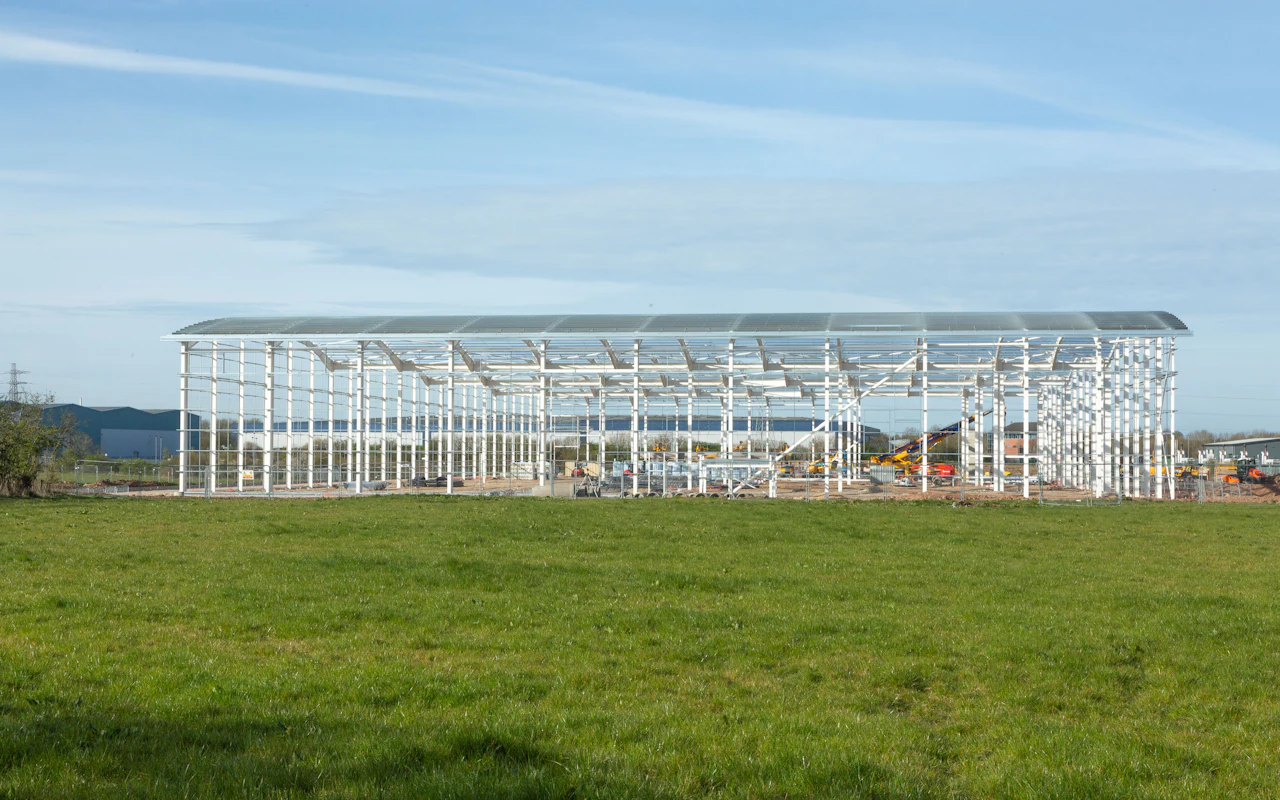
Say you run a distribution centre and you want a 20 m by 40 m steel-framed building on your yard for two peak seasons. There is no construction work on the site, so Class A does not apply.
You, or the supplier on your behalf, apply for planning permission for a limited period, say two years. If the council agrees, the permission will carry a condition requiring removal by the end date. Separately, because the building will stay more than 28 days, it also needs Building Regulations approval. Planning and building control are two different tests.
If the two years run out and the building is still needed, you would apply to renew or extend the permission before the date passes, not after.
What happens if you skip it
Building without permission does not mean nobody will notice. Councils can take enforcement action against unauthorised development. For breaches substantially completed on or after 25 April 2024, the time limit for enforcement in England is ten years, under GOV.UK’s guidance. That is a long time to have a building on your yard that could be ordered down.
It is very important to settle this before the frame arrives. Ask each supplier whether they handle the planning application, what drawings they provide and how long they expect it to take in your area.
Questions to put to your council
If you are unsure which row of the table you are in, a short note to the planning team usually settles it. It helps to send:
- A site plan showing where the building would go.
- The size: footprint and height.
- The use and the period you need it for.
Many councils offer pre-application advice, sometimes for a fee, and it is often worth it for a large building.
If you want prices while the planning question is being settled, temporary building quotes from suppliers who cover your site are a sensible next step, and most will tell you how they approach the application.
Sources for this post
- legislation.gov.uk: General Permitted Development (England) Order 2015, Schedule 2, Part 4, Class A
- legislation.gov.uk: General Permitted Development (England) Order 2015, Schedule 2, Part 4
- GOV.UK: Ensuring effective enforcement (planning practice guidance)
- legislation.gov.uk: Building Regulations 2010, Schedule 2